
UHC Einhorn Hünenberg: Your Floorball Club 2026
Your floorball club in Hünenberg: Find information about teams, training, membership & trial sessions at UHC Einhorn Hünenberg.
You might be at a completely normal point in family life. Your child wants to do sports, you’re looking for exercise after work, or you’re new to Hünenberg and want to meet people. Then a name comes up that you quickly hear around the region: UHC Einhorn Hünenberg.
That’s exactly where many start. At first, there’s just the question: Does this club suit us? Then come the practical points. Where is training held, how does a trial session work, which team is right, and do you really feel welcome there?
If you’re looking for a club where you don’t have to guess for long, you’re in the right place. I’ll explain the club as I would to a new dad at the hall’s edge or a new player after training. Clear, direct, and without club clichés.
Table of Contents
- Welcome to UHC Einhorn Hünenberg
- The Club Behind the Name
- Find Your Suitable Team
- Your Training Routine at Halle Ehret
- Your Path to the Unicorn in Three Steps
- Experience More Than Just Floorball
- Frequently Asked Questions for Parents and New Members
Welcome to UHC Einhorn Hünenberg
A typical scene looks like this: A family moves to Hünenberg, the child already knows some names from school, and at the kitchen table the question arises which club fits well. Football often comes to mind quickly. But if your child likes playing indoors, enjoys fast changes, and has fun with stick and ball, you often end up with floorball.

This is not a niche sport. Floorball is the second largest team sport in Switzerland after football, with over 33,000 licensed players, as the club states on its club page of UHC Einhorn Hünenberg. Practically, this means you’re entering a sport firmly established in Switzerland and with a solid place in a community like Hünenberg.
Many newcomers expect complicated procedures at first. In practice, it’s usually much simpler. You register, go to training, watch the group, and quickly notice if the atmosphere fits.
What the Club Gives You from the Start
- A clear place: You know where you’re going and who you’ll meet.
- An easy entry: No one expects perfect technique on the first evening.
- A social environment: Kids find connections, parents start conversations, adults meet training partners.
If your child imitates shots with the stick in the air on the way home after the first training, that’s usually a good sign.
Especially for families, the club is often more than just a sports appointment. It gives the week a fixed rhythm. Training on Tuesday, match on the weekend, messages in the team group in between, and conversations at the hall’s edge. This way, you grow not only into a sport but also into the community.
The Club Behind the Name
The name sounds playful. The club life behind it is down-to-earth. Since its founding in 1985, UHC Einhorn Hünenberg has combined ambition and tradition in youth development and sporting activity in the community of Hünenberg for over 35 years, as described in the club directory of the municipality of Hünenberg.
If you join new, this exact mix is often why you stay. Tradition here doesn’t mean everything feels old. It means the club has routines, experienced people, and a clear idea of how to properly support children, youth, and adults.
What You Immediately Feel
In a good club, you notice three things quickly. First, performance is taken seriously. Second, you’re allowed to make mistakes. Third, it’s not just about what happens on match day.
A simple example from the junior sector: A child comes to training and barely hits the ball at first. A good club doesn’t put them aside. The coach shows grip, posture, running path, and lets the same exercise run again. That’s where trust is built.
What That Means in Everyday Life
The club lives an attitude that is pleasant for new members:
- Joy in playing: You should like coming to training.
- Learning through repetition: Technique doesn’t happen by chance but through many clean sequences.
- Togetherness: Those who have been around longer often help the newcomers.
- Ambition: If you want more, you’ll find an environment with drive and direction in the club.
That sounds simple but is very valuable in everyday life. Parents see it because coaches don’t just look at results. Adults notice that trainings don’t feel random but have a clear thread.
Practical rule: After two trial trainings, don’t just ask if you like the game. Also ask yourself if the tone in the team suits you.
A club shows its culture not on paper but in small moments. Does someone greet you at the door? Does someone explain where the changing room is? Does an older player briefly take the ball after practice and show you a trick? Such things often say more than any self-description.
Find Your Suitable Team
Many interested people ask the wrong question first. They ask: “Am I good enough?” The better question is: “Which environment suits me or my child right now?” That’s where choosing a team becomes easy.
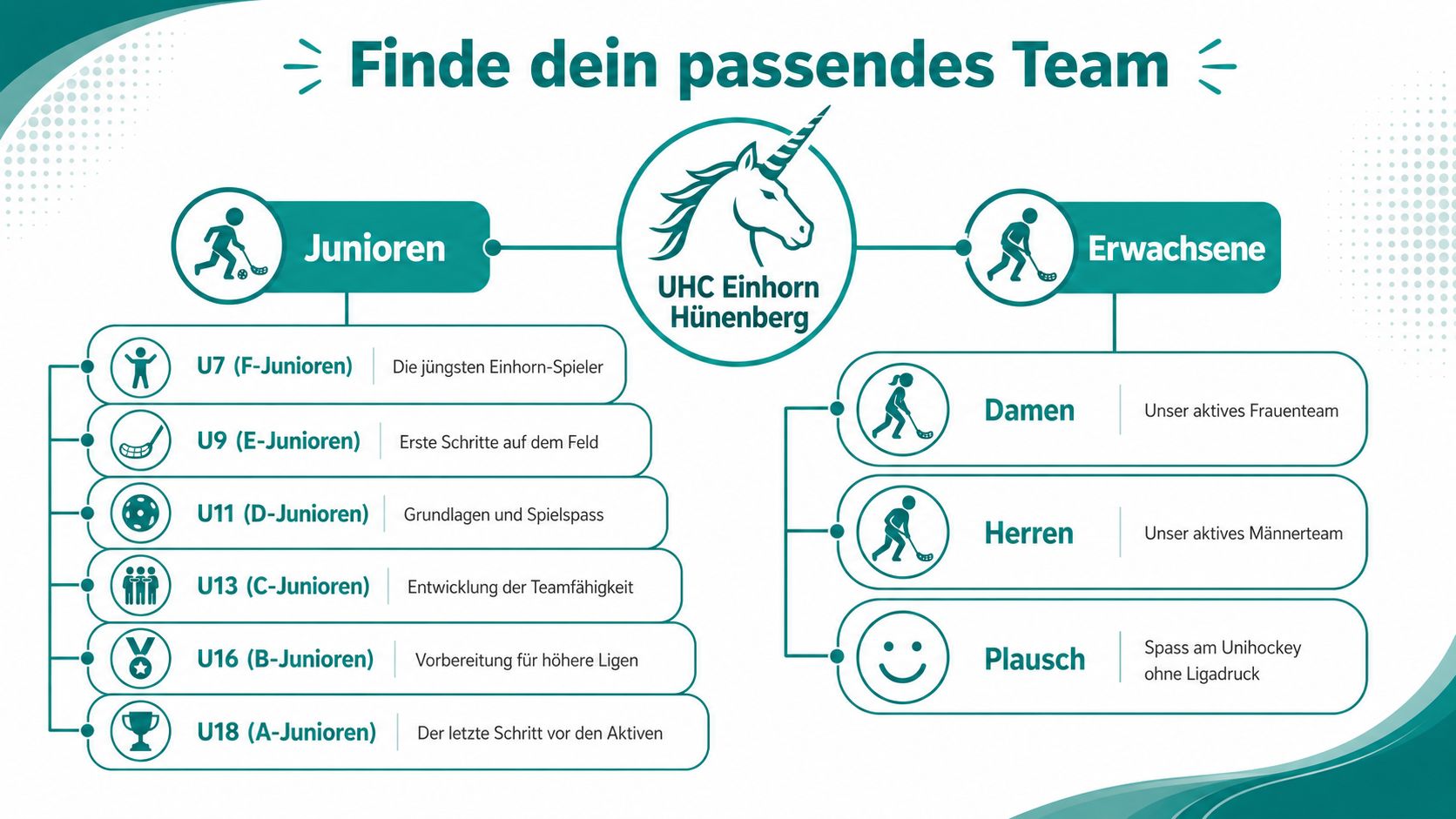
At UHC Einhorn Hünenberg, you’ll find a structure from youth to adults. For families, this is convenient because a child doesn’t join a club that only offers a small segment. There is a path from entry to higher age groups.
How to Recognize the Right Team
For younger children, it’s first about whether movement, ball feeling, and joy grow. It’s not about complicated tactics but the basics. Good training often shows itself in simple images: clean passes over short distances, changes of direction, small game forms, lots of repetition.
For teenagers, the focus shifts. The game becomes more structured. You notice more positions, more responsibility, and more speed. That’s where you see how well a club supports youth.
A strong sign is sporting success in the junior sector. The club’s U16 youth won the Swiss championship in cooperation with Zug United, as noted at Localcities about UHC Einhorn Hünenberg. This doesn’t mean every child must become a champion. It shows that good training is possible in the environment.
For adults, it’s more about training attendance, reliability, and the role in the team. Some seek competition. Others want to play regularly without every evening feeling like high performance. Both need their place.
| Area | What You Can Expect | Practical Example |
|---|---|---|
| Juniors | Technique, movement, joy of play | Your child first learns passing, stopping, and running with the ball |
| Youth | More game understanding and team roles | A player practices when to apply pressure and when to cover |
| Adults | Fixed training rhythm and match routine | You come to the hall after work and have a clear balance |
What to Watch for When Choosing
Not every child feels immediately comfortable in the same group. That’s normal. Watch for small points:
- Does the pace fit? If your child constantly seems overwhelmed, the group might still be too advanced.
- Does the atmosphere fit? A good team welcomes new faces instead of just dragging them along.
- Does the weekly rhythm fit? Training should fit into family life.
- Does the goal fit? Do you want fun, development, or more competition?
If you want a comparison to another water sports club, sometimes a look at the Kanuclub Rapperswil Jona at job.rocks helps. Not because of the same sport, but because you can also see there how strongly a club lives from the right environment.
The right team is rarely the one with the loudest name. It’s the team you like to show up to again.
Your Training Routine at Halle Ehret
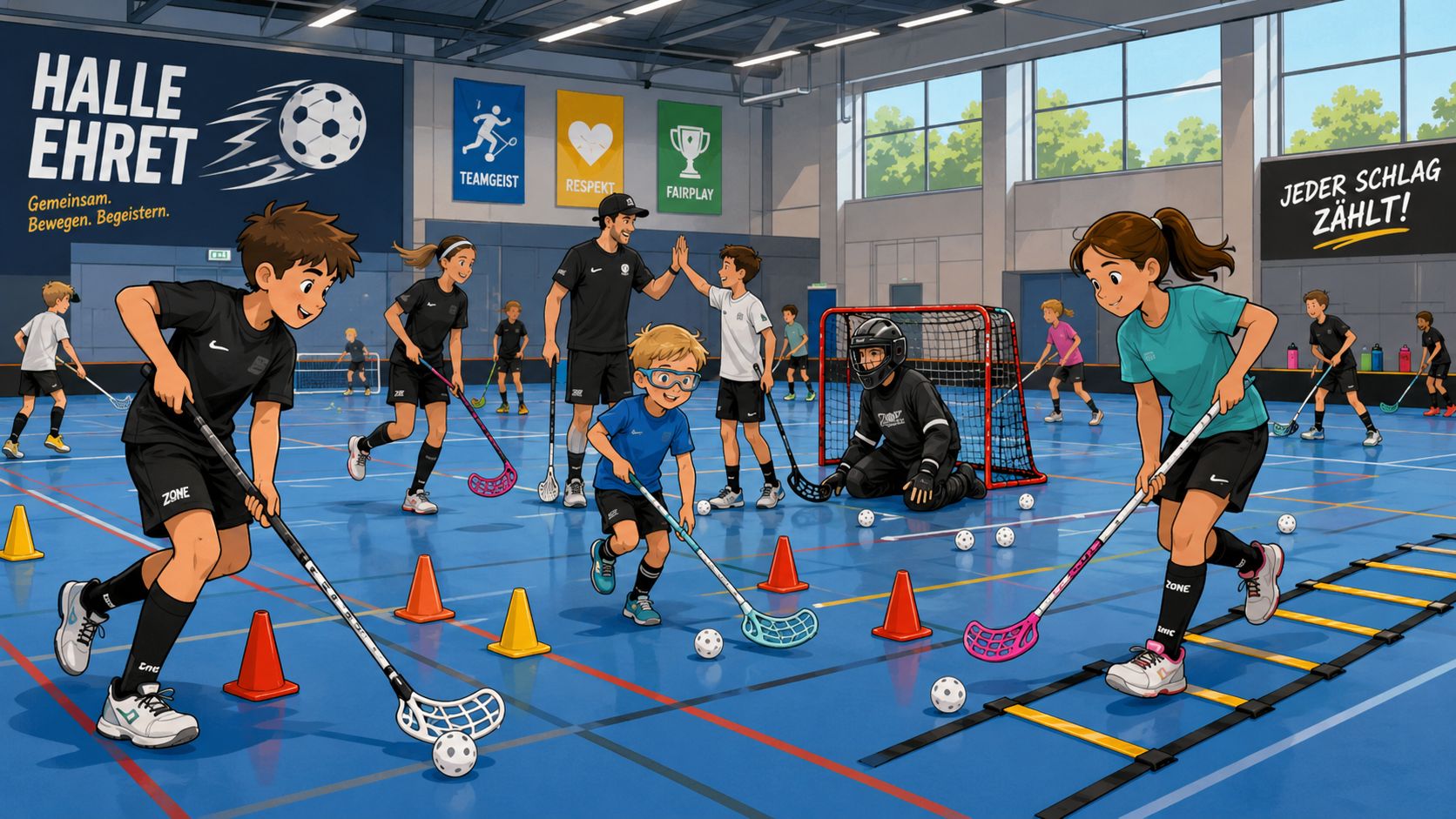
Once you know the club is interesting, things get practical. Where exactly do you go? How does an evening run? And how much preparation do you need at home? At UHC Einhorn Hünenberg, the Ehret triple sports hall in 6331 Hünenberg plays a fixed role. That’s where you train according to the entry in the Hünenberg club directory.
What a Typical Training Day Looks Like
For children, the evening often starts quite simply. You arrive at the hall, change, greet the team, and start with a warm-up or a catch game with stick and ball. Then follow exercises for technique and movement. At the end, there are usually game forms so the children can apply what they learned directly.
For teenagers and adults, the routine is often a bit tighter. Short warm-up, then technique under pressure, passing sequences, finishing exercises, and then game phases. If you’re new, you don’t have to understand everything immediately. Many things become clear after a few trainings.
What You Should Plan Practically
A training evening runs more relaxed if you arrange a few things early:
- Clothing: Indoor shoes, sportswear, and a water bottle are often enough at the start.
- Time buffer: Come a bit earlier. That leaves room for changing and a first chat.
- Travel: Once you know the way, visiting the hall quickly becomes routine.
- After training: Especially with children, the ride home is often the best moment for a quick check-in. What was fun, what was still difficult?
A simple family scene shows this well. The mother brings the child ten minutes before training starts, stays briefly on the sidelines, watches the first exercises, and then already knows much more than from any chat message. Later on the way home, the child doesn’t talk about tactics but about the first successful pass or a goal in the finishing game. That’s how familiarity grows.
If you’re a bit nervous at your first hall visit, that’s completely normal. After two or three evenings, the routine usually feels surprisingly normal.
Your Path to the Unicorn in Three Steps
If you want to join, you don’t need a complicated plan. Three clear steps are usually enough. The point isn’t to prepare everything perfectly. The point is to get into the hall at all.
Step One: A Simple Trial Training
The best start is almost always a trial training. You contact the club or the responsible contact person and briefly say who you are, the age of your child, or if you want to join yourself. That’s usually all you need at first.
For the first time, better bring fewer expectations than too many. No one has to shine on the first evening. If your child still holds the stick awkwardly or you yourself stand in a hall again after years, that’s normal.
A useful comparison from working life is good onboarding of new employees at job.rocks. The idea fits here too: a clean entry takes pressure off and quickly gives you orientation.
Step Two: Registration
After the trial training comes the actual decision. If you like the atmosphere, the team fits, and you want to stay, you register. Then you provide the information the club needs for playing and training operations.
If you’re now looking for fixed fees or a detailed cost table, ask the club directly for the current status. That’s better than planning with outdated info. Procedures and documents change over time in clubs, and a quick inquiry saves misunderstandings.
Step Three: Starting in Your Team
After acceptance, the real club routine begins. Now it’s worth keeping the first weeks consciously simple.
- Be punctual. This way you meet people before training starts.
- Ask questions. Where do you store equipment, how does warm-up work, who organizes rides?
- Stick with it. The first good feeling often doesn’t come in the first training but after a few repetitions.
Many newcomers start with the same mix of curiosity and uncertainty. The child wonders if they’re good enough. Parents wonder if they forgot something. Adults wonder if their level is sufficient. Almost always, this resolves through presence. Those who go, participate, and ask openly find the entry much faster.
Experience More Than Just Floorball
A club doesn’t live only from training plans. It lives from Saturdays in the hall, from short conversations on the stands, and from the moment when everyone stays together after a match. That’s exactly where you notice if a club only offers training or if you really feel belonging.

What Club Life Feels Like
On a home game day, the atmosphere is usually easy to read. Children run through the hall with sticks, parents exchange carpool arrangements, players prepare, and somewhere someone asks who will help with cleaning up. It seems unspectacular. That’s exactly what makes it so pleasant.
Such moments are valuable for new members. You don’t have to know all names immediately. It’s enough if you recognize a few faces and come along more naturally each time.
For such events to run smoothly, helpers and clear agreements are needed. Anyone who has planned shifts in clubs or events sees the benefit of simple solutions like the Helper App for temporary staff at job.rocks.
How to Stay in the Loop
Not everyone can be at every match in the hall. That’s exactly why club channels are practical. On Instagram, the club has over 910 followers under @uhceinhorn and regularly shares insights into games, tournaments, and club life, often under the motto #hoppeinhorn, as seen on the Instagram profile of UHC Einhorn Hünenberg.
This is useful in everyday life. If you’re new, you quickly get a feel for the club’s tone there. You see pictures from hall life, notices about tournaments, and often exactly the moments that make club life: group photos, match days, small successes, relaxed scenes beside the field.
- For parents: You stay connected even if you’re not in the hall.
- For teenagers: You see how other teams in the club are doing.
- For new adults: You quickly notice if you like the atmosphere.
A good club channel doesn’t replace training. But it makes your entry easier because you get a feeling for the people before your first evening.
Frequently Asked Questions for Parents and New Members
Open questions almost always come only when the start gets closer. That’s normal. Here you’ll find the points where parents and newcomers usually get stuck briefly.
What Equipment You Need at the Start
For the first entry, a simple basic equipment is often enough. Indoor shoes, sportswear, and a water bottle are what you should think of first. For the stick, it’s worth asking the team or coach briefly so length and side fit.
For children, a simple rule applies: Don’t buy everything in top quality immediately. If your child stays with joy after the first trainings, you can gradually add equipment properly.
Who Helps You with Questions
If something is unclear, go directly to the person closest to you. In everyday life, that’s often the coach or team leader. Don’t wait too long with questions just because you don’t want to bother anyone.
Typical questions are quickly clarified:
- Missed training? Just ask the team briefly.
- Uncertainty about equipment? Contact before the next training.
- Child still feels unfamiliar? Speak openly about it. Coaches can help much better if they know early.
What Many Parents Want to Know Before Starting
A few questions come up repeatedly. Here are short answers from practice.
| Question | Short Answer |
|---|---|
| Does my child have to be able to play already? | No. Entry is possible without prior experience if the group fits. |
| Should I stay at the first training? | If your child wants, yes. A quick look from the side can help. |
| How quickly do you make connections? | Often faster than expected if you come regularly. |
| What to do if unsure? | Don’t overthink. Ask directly and go to training again. |
For adults, it’s almost the same as for children. You don’t have to be fit first to join the club. The club is often exactly the place where you get moving again.
In the end, a simple test counts: Do you or your child leave training with the feeling of wanting to play again soon? If yes, then many things already fit.
If you plan shifts, helpers, or teams yourself and are looking for a lean solution, check out job.rocks. The platform helps you organize availability, scheduling, time tracking, and communication cleanly in one place. Especially for clubs, event teams, and companies with changing shifts, it saves a lot of coordination in everyday life.
Meta description: Want to know if UHC Einhorn Hünenberg suits you or your family? Here you get a clear guide from first impression to starting in the team.